
How long does it take to be a licensed esthetician?
Aesthetician licensure requires 600-1,500 training hours depending on state. Programs typically take 4-12 months to complete.
Articles, Training Resources & Industry Insights for Medical Professionals
Aesthetician licensure requires 600-1,500 training hours depending on state. Programs typically take 4-12 months to complete.

Mobile aesthetician careers require licensure, portable equipment, liability insurance, business permits, and transportation for client locations.

Sephora scholarship supports beauty education for underrepresented individuals pursuing cosmetology, aesthetics, or related beauty industry careers.

Aestheticians cannot legally administer fillers in most states. Only licensed medical professionals can perform injectable procedures.

Chiropractors can take Botox training in some states. Scope of practice for chiropractic Botox use varies significantly by jurisdiction.

Chin lipo candidates are healthy adults with good skin elasticity and localized fat deposits. Consultation determines individual eligibility.

Without a license, options include skincare sales, makeup artistry, beauty writing, spa reception, and product brand representation roles.

Income potential varies by specialization and market rather than license type. Medical aesthetics and business ownership offer highest earnings.
Cost comparison varies by treatment extent. Kybella: $2,400-$7,200 total. CoolSculpting: $2,000-$4,000 per area for fat reduction.
High aesthetician earnings require advanced certifications, premium market positioning, business development skills, and client retention systems.
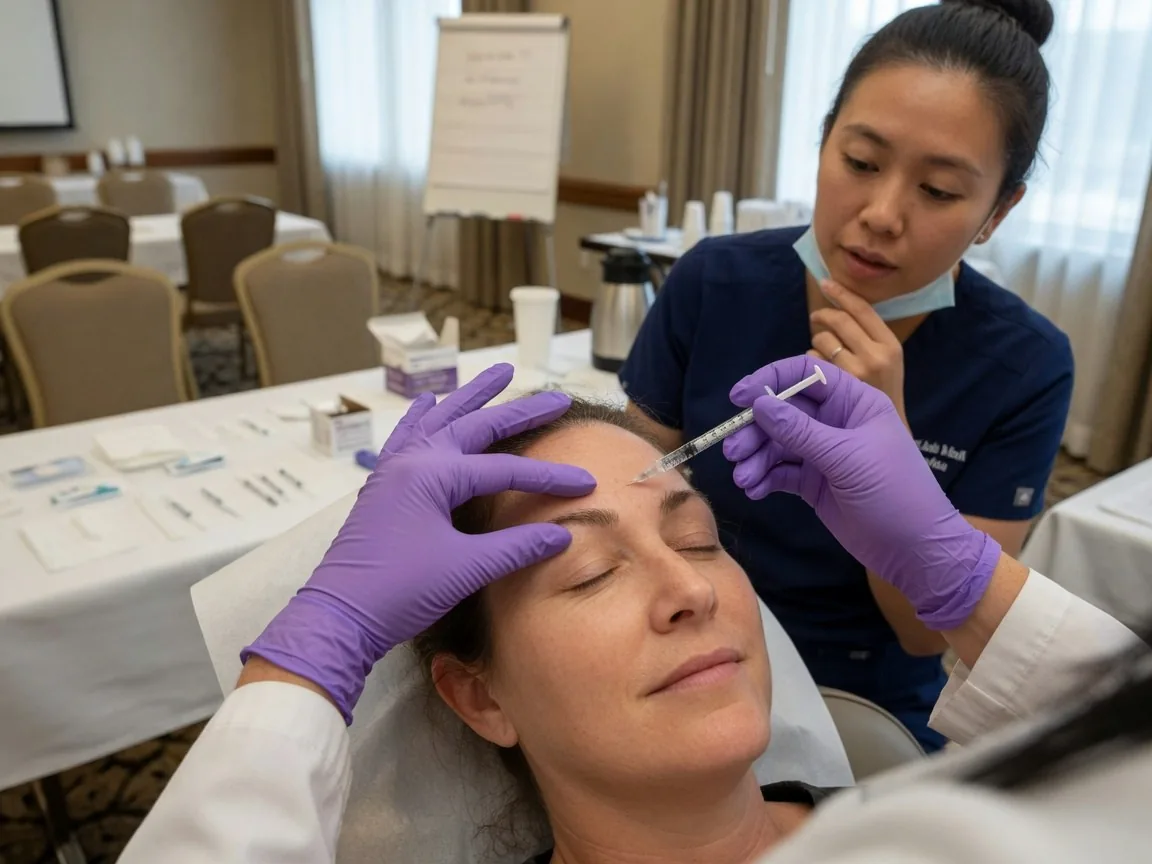
Botox training courses typically last one to three days depending on program depth. Some include extended hands-on practice sessions.

Practicing Botox after training depends on your license, state regulations, and supervision requirements. Some states require oversight initially.
Aesthetic.Education | The Next Step in Medical Learning

Aesthetic Education promotes training for Physicians, Nurses, Dentists and other certified healthcare professionals. Aesthetic Education is a resource for clinicians who want to add these skills to their practice.
Get updates on new courses, special offers, and industry news
Patient-friendly references our students use to explain procedures and career paths.