Who performs aesthetic injections in West Virginia?
There is no federal licence or national certificate for cosmetic injectables in the United States. Each state decides, through its own licensing boards, which professionals may inject, under what supervision, and after what training. The table below is the general pattern across the country; West Virginia sets its own version of these rules, so treat it as orientation and confirm the detail with the boards listed further down.
| Licence | How injectables usually sit in their scope |
|---|---|
| Physician (MD, DO) | Generally may perform aesthetic injections within their training and competence, and in most states may delegate them to other qualified staff. |
| Nurse practitioner (NP) | Usually injects under the practice authority their state grants, which in some states is independent and in others involves a collaborating physician. |
| Physician assistant (PA) | Typically injects under a supervising physician relationship as defined by the state. |
| Registered nurse (RN) | Commonly injects under a physician's order, delegation or written protocol, with the patient assessment performed by the delegating prescriber. |
| Dentist (DDS, DMD) | Scope varies more than for any other licence. Some states limit dental injectables to the oral and maxillofacial region; others read the dental practice act more broadly. |

What training do boards expect?
Because there is no single national credential, boards generally look for documented, hands-on training appropriate to the procedure and the licence: supervised practice on live patients rather than an online-only certificate, facial anatomy and danger zones, patient assessment and consent, and complication management including how to reverse a hyaluronic acid filler. Keep your certificate of completion, the course agenda and a record of your supervised injections on file.
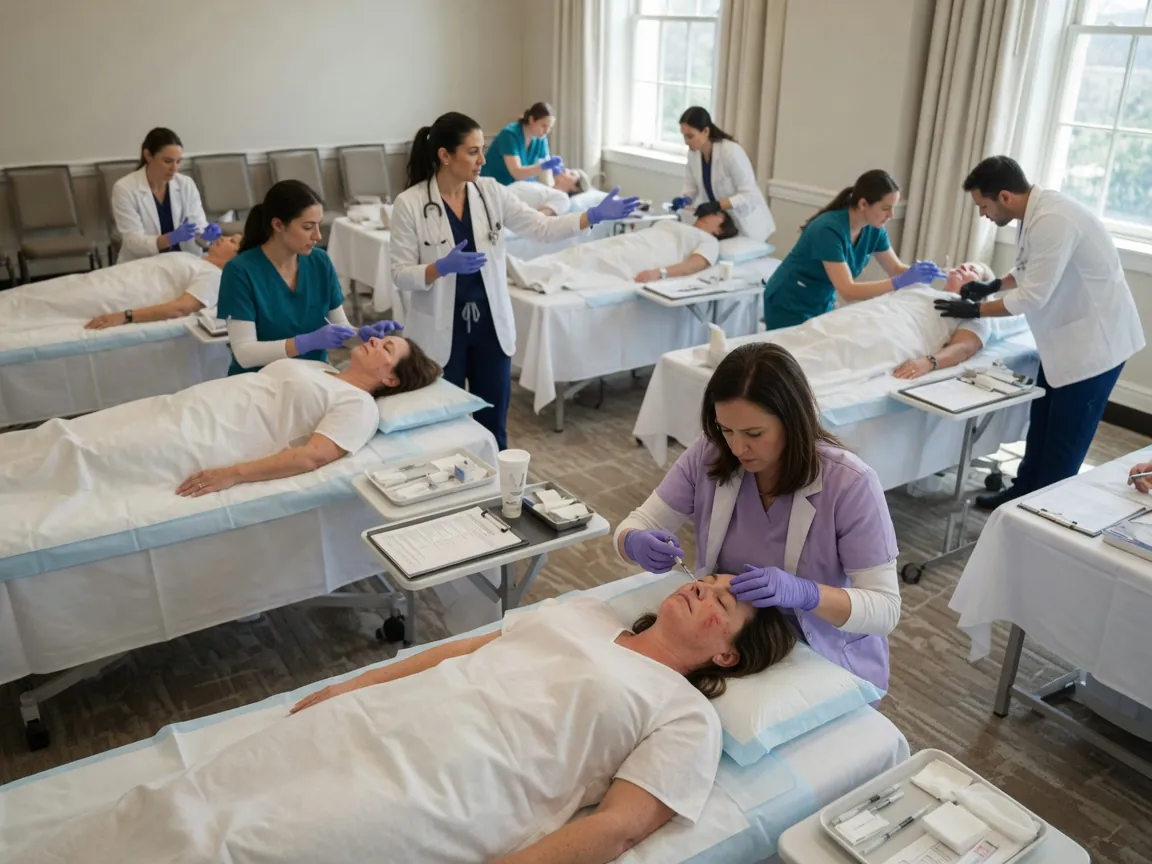
The workshops listed on this site are taught by physician instructors in groups of six or fewer, combine online modules with a hands-on day on live patients, and issue a certificate of completion, with CME credit where the course qualifies. Tuition starts at $1,699 for a first workshop.