About Our Training Programs
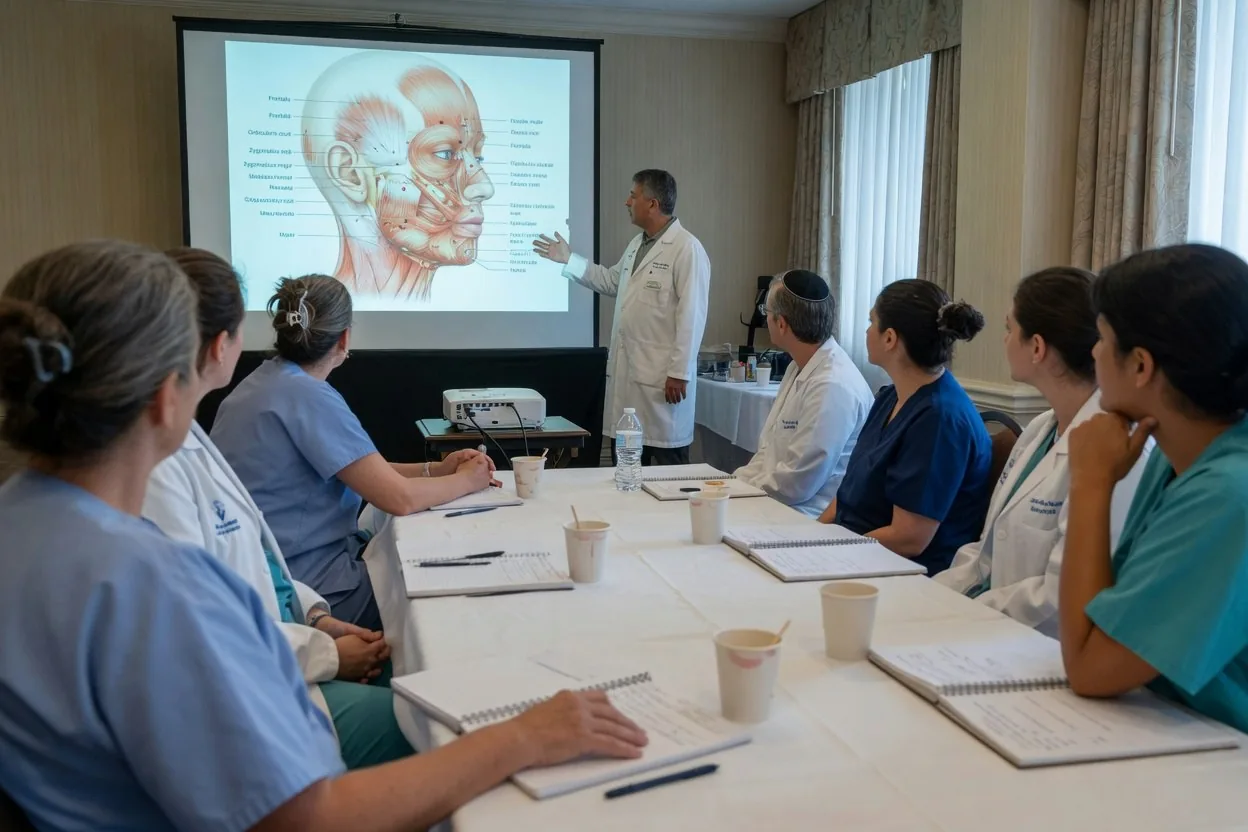
Hands-on certification courses for physicians, nurse practitioners, physician assistants, dentists and nurses: Botox and neurotoxins, dermal fillers, PRP, sclerotherapy and PDO thread lifts, taught by physician instructors in groups of six or fewer.
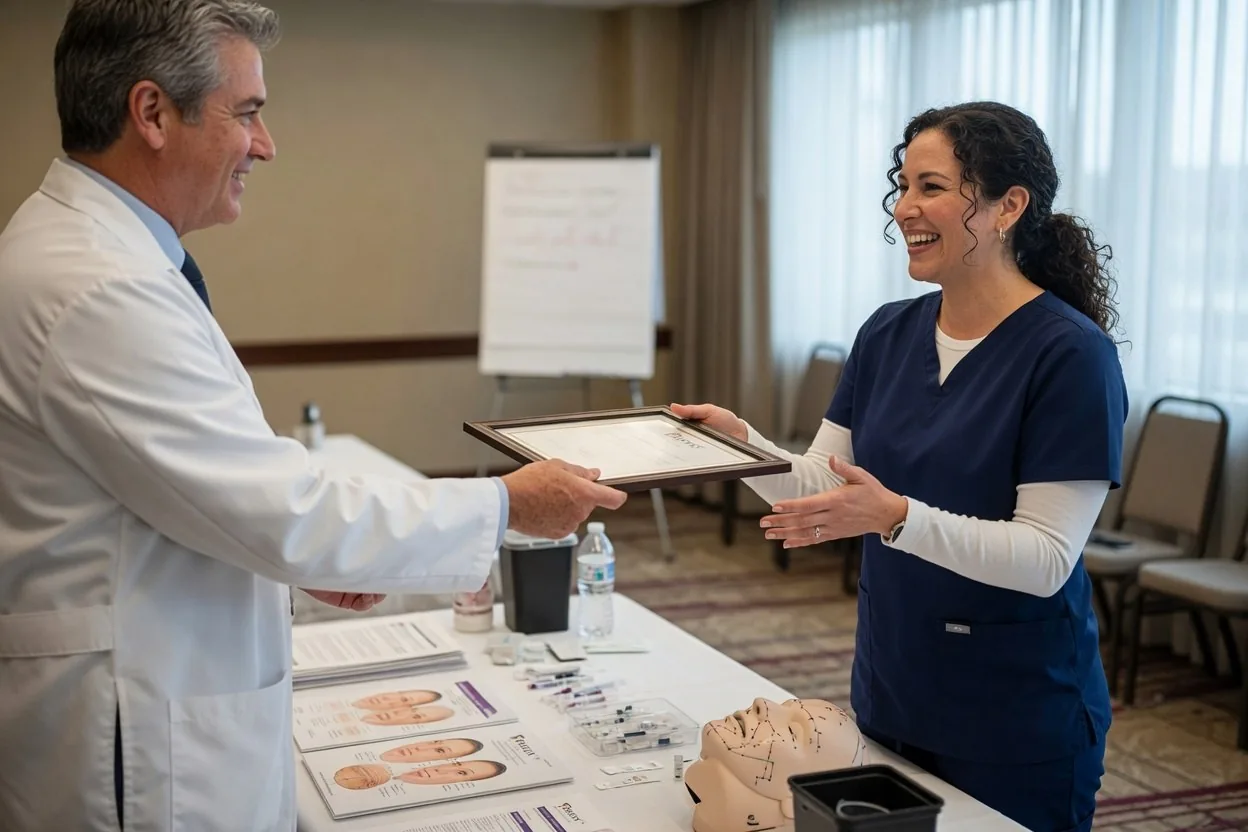
Every course pairs online didactic modules with a live-patient day, so you leave with technique you have actually performed, a certificate of completion with CME credits where the course qualifies, and post-course support from the clinical team.

How the Training Works
Online Pre-Course
Complete the streaming video course sent as soon as your seat is confirmed
Pass Assessment
Complete the post-test before attending your live training session
Live Workshop
Attend half-day hands-on training with protocol review and Q&A
Hands-On Practice
Inject real patients under MD supervision in groups of 6 or fewer
Real Products, Real Patients
All licensed participants perform injections using actual Botox and Juvederm on live models. Instructors review your technique one-on-one and provide personalized feedback to improve your skills.
Evidence-Based Techniques
We teach classic injection techniques from peer-reviewed medical literature with strong emphasis on facial anatomy and proper injection depths for safe, effective results.
Flexible Options
Take Botox and Dermal Fillers together, or choose Botox certification alone at a reduced rate. Customize your training to match your practice needs.
Bonus Materials Included
Receive procedure video clips plus downloadable, editable patient consent forms and documentation templates ready for your practice.
What You'll Learn
Comprehensive curriculum covering all aspects of injectable aesthetics
Botulinum Toxin Training
- Facial anatomy, skin structure, and muscle physiology
- Understanding static vs. dynamic wrinkles
- FDA-approved indications and off-label uses
- Reconstitution, dilution, and syringe selection
- Patient assessment and consent procedures
- Injection Techniques for:
- Glabellar lines, forehead, crow's feet
- Brow lift, bunny lines, lip lines
- Gummy smile, lip flip, neck bands
- Complication management and follow-up
- Live Hands-On Injection Practice
Dermal Filler Training
- Types of fillers: Juvederm, Restylane, Belotero
- FDA indications, contraindications, warnings
- Injection depth protocols (superficial to deep dermis)
- Local anesthetics and dental blocks
- Treatment Areas:
- Nasolabial folds and marionette lines
- Lip augmentation and vermillion border
- Cheek volumization and contouring
- Under-eye hollows (tear troughs)
- Layered treatments and touch-ups
- Emergency protocols for vascular occlusion
- Live Hands-On Injection Practice
Business & Practice Management
Learn practice setup, pricing strategies, ROI optimization, marketing techniques, patient consultation best practices, and building a loyal client base.
Upcoming Botox Training Dates
Choose from 80 upcoming sessions across the United States
Clinical reference: injection sites and complications by areaFor enrolled clinicians and instructors. Tap to expand.
Botulinum Toxin-A Injection Complications by Area
The most common injections for Botulinum Toxin-A are in the upper third of the face. Understanding proper technique and potential complications is essential for safe administration.
Forehead (Frontalis Muscle)
The injections should be intra-dermal which is taking a 5-10° angle at the point of needle penetration and breaking the skin. When the needle is below the skin a small amount (typically .05 – 1.0cc) is administered within the soft tissues of the epidermis or dermis (avoiding the periosteum). The areas of the injection for the Frontalis is at least (1) finger breath above the eyebrow and should not extend laterally beyond the frontal limbus. The injection may be painful due to superficial nerves throughout the forehead and visual observation should be used to avoid the (2) large veins of the forehead; supratrochlear vein and supraorbital vein.
Potential Complications:
- Brow Ptosis / Heaviness: This condition occurs where either the injection of the Botulinum Toxin-A was delivered too low (less than one finger breath above the eye brow) or the Glabella Region was not treated at the same time. The Frontalis Muscle is the only elevator muscle in the upper 1/3 of the face – if relaxed and the depressing muscles interacting with the frontalis are not relaxed it is possible for the eyebrow to lower and or feel heavy to the patient. Other possible reasons for this condition could be administering too large an amount (units) of the Botulinum Toxin-A in the area. This is a cosmetic condition and could last the duration of the expected treatment.
Glabella Region (Procerus and Corrugator Muscles)
There are (3) distinct muscles that make up the Glabella Region of the face and are depressing muscles; Procerus, Corrugator, and Depressor Supercilii. Only the Procerus and Corrugator muscles are typically injected in a procedure. These injections for the Glabella area are intermuscular injections since there is a possibility of diffusion and there are fibers of the frontalis muscle that if infiltrated with the botulinum toxin-A could cause ptosis of the eyebrow or possibly the eyelid. Proper technique demands that you isolate these muscles by pinching these muscles prior and during the injection to confirm location as well as the ability to feel resistance during the needle penetration of the muscle and when infiltrating the muscle with the medication.
Potential Complications:
- Asymmetry: Unevenness of the eyebrow can be eliminated by ensuring that the proper dosing is administered at each injection point. Other reasons for exaggerated asymmetry of the eyebrow would be a pre-existing asymmetry of the brow that was not addressed before treatment.
- Eyelid Ptosis: Botulinum Toxin-A must not be allowed to migrate or diffuse within the orbital rim, because the medication would affect other muscles within the eye that work with acetylcholine for muscle contraction specifically the levator palpebrae superioris muscle that controls the elevating of the eyelid. If weakened or relaxed the eyelid will not raise correctly – this condition typically lasts (2) weeks as the histamine release within the eye will break down the botulinum toxin-A quickly. This condition is avoided by using the pinch technique when injecting the Glabella Region.
- Eyebrow Ptosis: Unevenness of the eyebrow can be eliminated by ensuring that the proper dosing is administered at each injection point. Other reasons for exaggerated asymmetry of the eyebrow would be a pre-existing asymmetry of the brow that was not addressed before treatment.
Lateral Canthal Rhytids (Crows Feet Area)
Hypertrophic Platysmal Bands can be relaxed with the Botulinum Toxin-A and work very well in minimizing the look of these protruding bands. The injection needs to be directly into the bands at approximately .75in apart both proximal and distal of the indication of the protruded bands. Patients typically grimace which over exaggerates the bands and the physician will be able to isolate the band and enter into these bands with a slight lateral approach. Confirmation of location is achieved when the needle breaks into the band and the medicine is dispersed.
Potential Complications:
- Weakened Neck Flexors/Dysphagia: Though usually associated with the side effects of using botulinum toxin for neck, tongue, and jaw dystonia there is a possibility of it occurring in a platysmal band aesthetic injection. The issue is that every patient is different and if injecting the sternocleidomastoid (SCM) muscles the botulinum toxin may diffuse to the strap muscles on the hyoid bone that may inhibit the tongue to push food back and trigger the throat to swallow. The frequency of this type of side effect are related when the bilateral injections are more frequent or if large doses are injected. The side effects are transient and last typically 4-6 weeks after the incorrect placement of the injections.
Lips (Vertical Rhytids – Orbicularis Oris)
Vertical Lip Lines and Perioral Rhytids can be treated with Botulinum Toxin-A and are administered as an intradermal injection at small dosages (1-2u). The muscle itself covers a number of other muscles needed for facial expression so location of the injections and performing them as an intradermal injection will keep you safe from complication. Other considerations associated with the injection is that the injections need to be above the vermillion border and lateral to the philtrum as well as away from the corner commissure. Each of these areas will lead to a poor aesthetic result and complication associated with needle placement.
Potential Complications:
- Asymmetric Smile: This occurs when the proper dosing is not administered equally to both sides of the muscle. This is not a strong muscle and is the reason for the smaller dosing volumes even the smallest difference in units may weaken one side of the lip compared to the other. It is possible to create asymmetry even if everything was done correctly and why it is better to use a smaller initial dose so that you have the ability to titrate to give correction to the asymmetry with no further side effects.
- Drooling | Speech Interference: Botulinum toxin injections in this area need to be conservative, there are a number of people that are sensitive to the medication where the effect is greater than in other individuals. Drooling and speech interference for these types of injection is almost always associated with excessive dosing and volumes when treating this area.
Bunny Lines (Nasalis)
This common injection is not without its need for proper placement of the injection or has risk associated with the injection. Most dosing charts state that the nasalis muscle injection needs to be intermuscular however it is difficult to know if you are in the muscle when it is a very thin banded muscle. Therefore, the proper technique to inject this muscle is to have the patient form these lines by facial expression and inject the peaks (not valleys) of the rhytids portrayed by the patient. It is typically one injection per side and should not go lateral to the side bridge of the nose with the needle direction pointing medial due to the possibility of diffusion. Slow infiltration will limit unwanted diffusion as the botulinum toxin will stay encapsulated with soft tissue chambers rather than forcefully injecting the medication.
Potential Complications:
- Asymmetric Smile | Dropping of Upper Lip: This occurs when the injection is too far lateral in the nasalis muscle and the direction of the needle was not medial. The botulinum toxin may diffuse to the labii superioris alaeque nasi muscle that controls the elevation of the facial upper lip. If weakened by the medication it would lead to relaxation of the muscle and may affect the upper lip either bilaterally (if both injections were done improperly) or unilaterally. Proper technique will avoid this complication.
Sad Smile (Depressor Anguli Oris)
When injecting the Depressor Anguli Oris (DAO) it is important to understand that this is not a deep muscle but is more superficial. The Depressor Anguli Oris is in proximity to and in many cases is covering another muscle, Depressor Labii Inferioris muscle that controls your lower lip movement. Either by making too deep an injection or by diffusion (injecting too hard) it may affect the lower lip. Injecting more distal within the muscle will also reduce any other complication with the various muscles associated with the corner commissure.
Potential Complications:
- Inability to Lower Bottom Lip: This complication is aesthetic and will last the duration of a normal botulinum toxin injection (13 weeks). The diffusion from the injection of the DAO muscle into the Depressor Labii Inferioris muscle is not allowing the lower bottom lip to lower. To avoid this complication take a 15-20° angle to the injection and aim for the corner commissure but start lower in the muscle and do not go too deep – about 4-5mm in depth.
Additional Considerations
Botulinum Toxin-A Systemically
For cosmetic Botulinum Toxin treatments, the amount injected does not warrant permanent disability or nerve damage associated with an intravascular injection. However, there have been studies in rats that show that large doses of botulinum toxin systemically may affect distant muscles as they have very small bodies and diffusion would be greater. There are theories that the reason some patients suffer headaches from botulinum toxin injections is the possibility of the medication going systemic after the injection. However, the majority of evidence does not support any claim that Botulinum Toxin-A cosmetically (under 100u) could cause any problems of major significance or have much spread at all since it has never been confirmed in any patient receiving botulinum toxin.
Course Policies & Information
CME Accreditation
Our courses are CME-accredited for licensed medical professionals. Need assistance? Contact us at (866) 261-5164.
Cancellation Policy
Cancel 14+ days before: full refund less $200 fee. Later cancellations may transfer to future workshops. Full refund if course is canceled by AE.
Licensing Requirements
Practitioners must ensure compliance with their state's scope of practice regulations. Contact your state board with licensing questions.
AE is not responsible for hotel deposits, non-refundable airline tickets, or associated travel fees.